
Therapeutic Spiral Model (TSM) Psychodrama: Theory & Practice with Trauma. How the Therapeutic Spiral Model Works? Foundations and Expansions.
Module 8. Overview of the TSM Trauma Triangle.
Explore the TSM trauma triangle and its roles with expert Dr. Kate Hudgins.
Residence countries are grouped into Bands A–D, offering 30–70% off all modules and courses. Find your band here.
About the Course:
This video course introduces Innovative Clinical Psychodrama as an effective and safe method for treating trauma and PTSD. Recent research in the neurobiology of trauma and attachment underscores the efficacy of experiential, body-based approaches in psychotherapy and education. Clinicians working with trauma aim to establish a secure and contained therapeutic environment. Action therapy plays a pivotal role but can sometimes trigger unprocessed trauma material, leading to flashbacks and decompensation. TSM, developed by Board Certified Psychodrama Trainers, Educators, and Practitioners Kate Hudgins, Ph.D., and Francesca Toscani, M.Ed., TEP, serves as a guide for trauma treatment. TSM integrates classical psychodrama, attachment theory, and insights from interpersonal neurobiology and trauma theory, enhancing safety and structure when working with trauma.
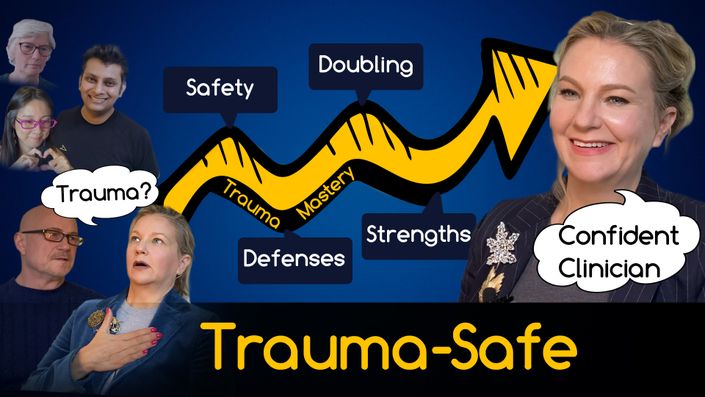
This video module delves into the TSM Trauma Triangle, a unique configuration spotlighting the destructive cycle of the roles of Victim, Perpetrator, and Abandoning Authority. While Karpman's Drama Triangle is familiar in addiction treatment, TSM offers a triangle to represent the internalized trauma roles. This transformative module equips clinicians with the tools to help clients to break free from trauma-based roles, fostering a shift from self-neglect to self-care and integrating healthy problem-solving skills into daily life. Join the transformative individual session of the counselor from the US led by Dr Kate Hudgins.
This module is designed for:
• Therapists
• Social workers
• Psychologists
• Counselors (including substance use counselors)
• Psychodramatists
• Educators
• Coaches
Appropriate for those who are new to action methods, as well as experienced practitioners, students in mental health fields, and those who want to develop their skills in action methods. Acting skills are not necessary.
Learning Objectives:
• Describe the TSM Trauma Triangle and its versatile applications in education, therapy, and organizational contexts.
• Explain the use of the TSM Trauma Triangle to illustrate the trauma internalization into victim, perpetrator, and abandoning authority roles.
• Demonstrate how to assess TSM trauma-based roles.
• Explore the methods to transform the trauma triangle roles safely into prescriptive roles of transformation.
• Demonstrate how to investigate personal trauma triangle patterns and develop strategies to transform the identified pattern, constructing the role of Appropriate Authority to interrupt the repetitive internalized trauma pattern.
Module highlights:
• Warm Up: Distinguish the TSM Trauma Triangle model from other frameworks.
• Action: Demonstrate ways to integrate TSM’s prescriptive roles to enact and transform the trauma-based roles safely and without re-traumatization.
• Sharing: Discover that action methods help your clients to express long-hidden talents, feelings, and dreams.
How and where to use:
• Issues/concerns: trauma work, ptsd, cptsd
• In Clinical and non-clinical setting
• Individual and group setting
• Online and in-person (therapy, counseling, classes, group leading)
• Education and Coaching
This model provides a secure and effective approach for various objectives, including class management, fostering group cohesion, supporting group development, facilitating organizational development, and addressing business-related tasks.
Presenters:
Dr. Kate Hudgins is PhD, TEP, an inspirational leader and a stellar trainer known worldwide for her innovative model of safe and effective trauma treatment. International expert and author on trauma, Kate brings rigorous clinical training in psychology, psychodrama, and experiential psychotherapy as well as cross-cultural and indigenous learning and her own life experience.
Module Includes:
Main Content:
• Videos - 59 min
• Handouts - 171 min
• Test - 30 min
• Course Survey - 5 min
Recommended Content:
• Healing Trauma with the Therapeutic Spiral Mode. Interview with Dr. Hudgins. Part 1
• Healing Trauma with the Therapeutic Spiral Mode. Interview with Dr. Hudgins. Part 2
• Healing Trauma with the Therapeutic Spiral Mode. Interview with Dr. Hudgins. Part 3
• Practicum - 45 min
Hours for Certificate:
• 5 training hours on the Action Explorations Education Certificate. Our courses may be applied toward professional certification/training hours, depending on your board’s policies. Please verify eligibility with your certifying board or primary trainer. We’re happy to connect and answer questions about course content, hours, and documentation. Reach out anytime with your questions.
Module Curriculum
Recommended Videos Not Included in Total Hours for Certificate
- Recommended video to watch Healing Trauma with the Therapeutic Spiral Model. Interview with Dr. Hudgins. Part 1 of 3.
- Recommended video to watch Healing Trauma with the Therapeutic Spiral Model. Interview with Dr. Hudgins. Part 2 of 3.
- Recommended video to watch Healing Trauma with the Therapeutic Spiral Model. Interview with Dr. Hudgins. Part 3 of 3.


What Students Are Saying ⭐
Real reviews from students who have taken this course.